
Experimental setup
- 01Scanning. The Face ID camera of an iPhone 12 Pro Max scans the face, using the paid app Heges 3D Scanner, a good three million triangles. The old iPhone on purpose: newer models have a worse Face ID sensor. Then it gets cleaned up: shoulders and back of the head gone, floating bits gone, the seam in the scan welded shut.
- 02The templates. Wolf, Phantom, Oni and Hannibal are designs by other people from Makerworld. Here in the lab they are not reinvented, just made to fit.
- 03Fitting. In Blender the mask lies over the face. Where it comes too close, it is gently bent away until there are about three millimetres of air everywhere. Eye holes over the eyes, nose hollow over the nose. In front of the mouth the Hannibal mask gets more room, or the lips would touch the grille.
- 04Printing. Out comes a file for the printer, one per face. They are printed in PLA, four to twelve hours depending on the mask. Then padding and an elastic strap go in, and some masks get painted.
Incident
On the first attempt, Blender was simply supposed to make the mask thicker. Spikes shot out up to 43 metres, and the computer went to its knees. Since then there is a separate spacer body: the face plus one millimetre.
Evidence
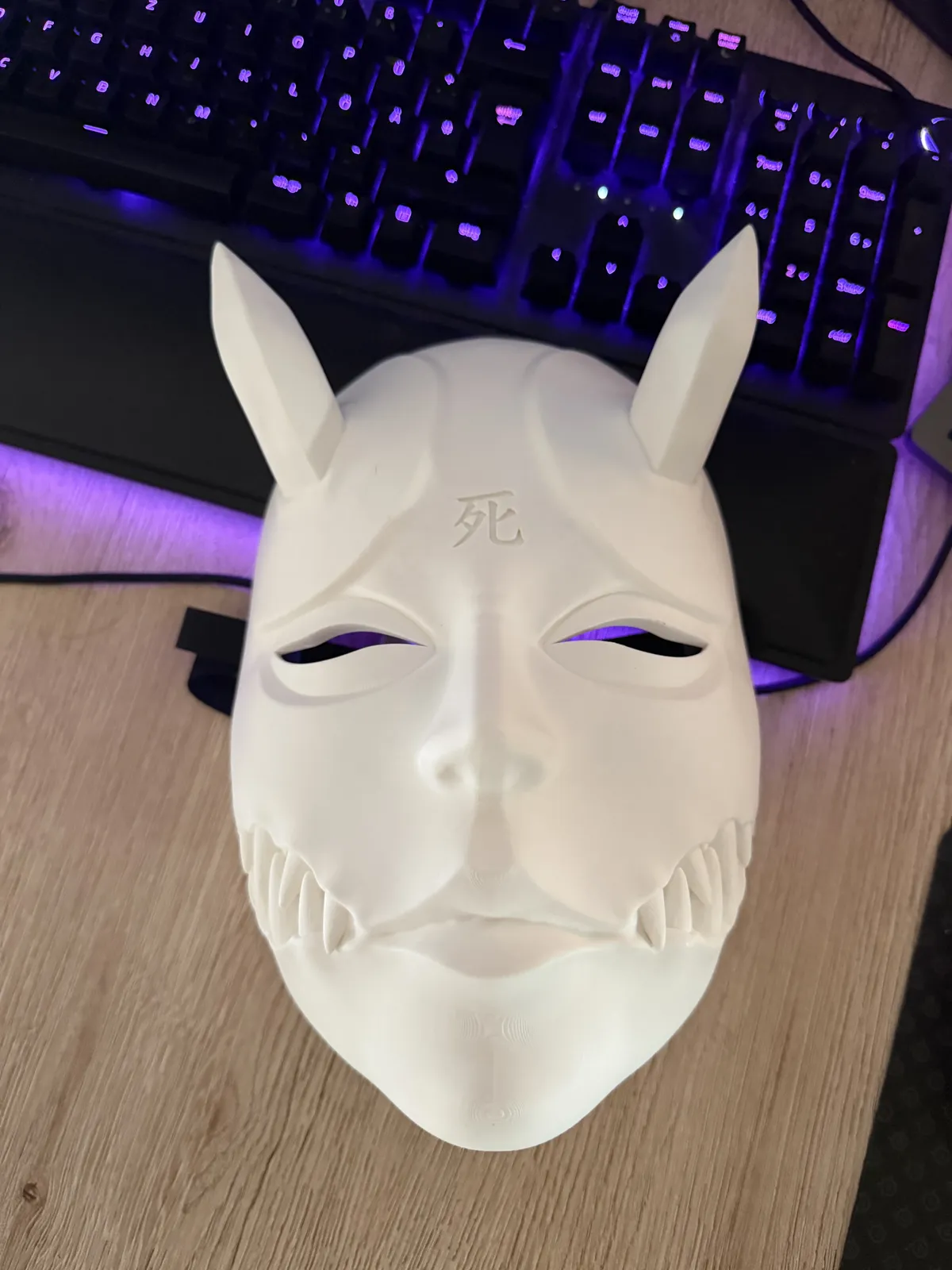
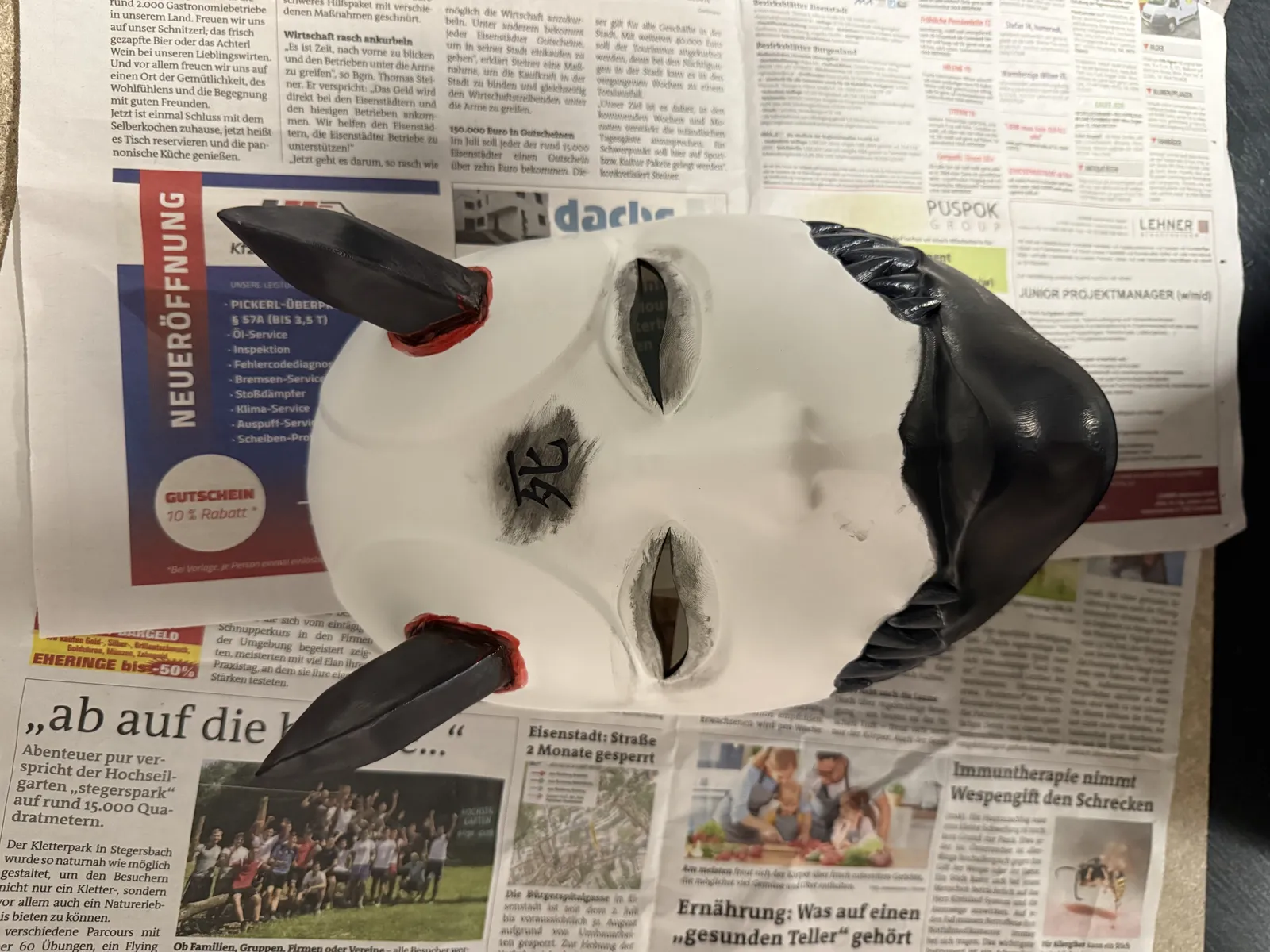

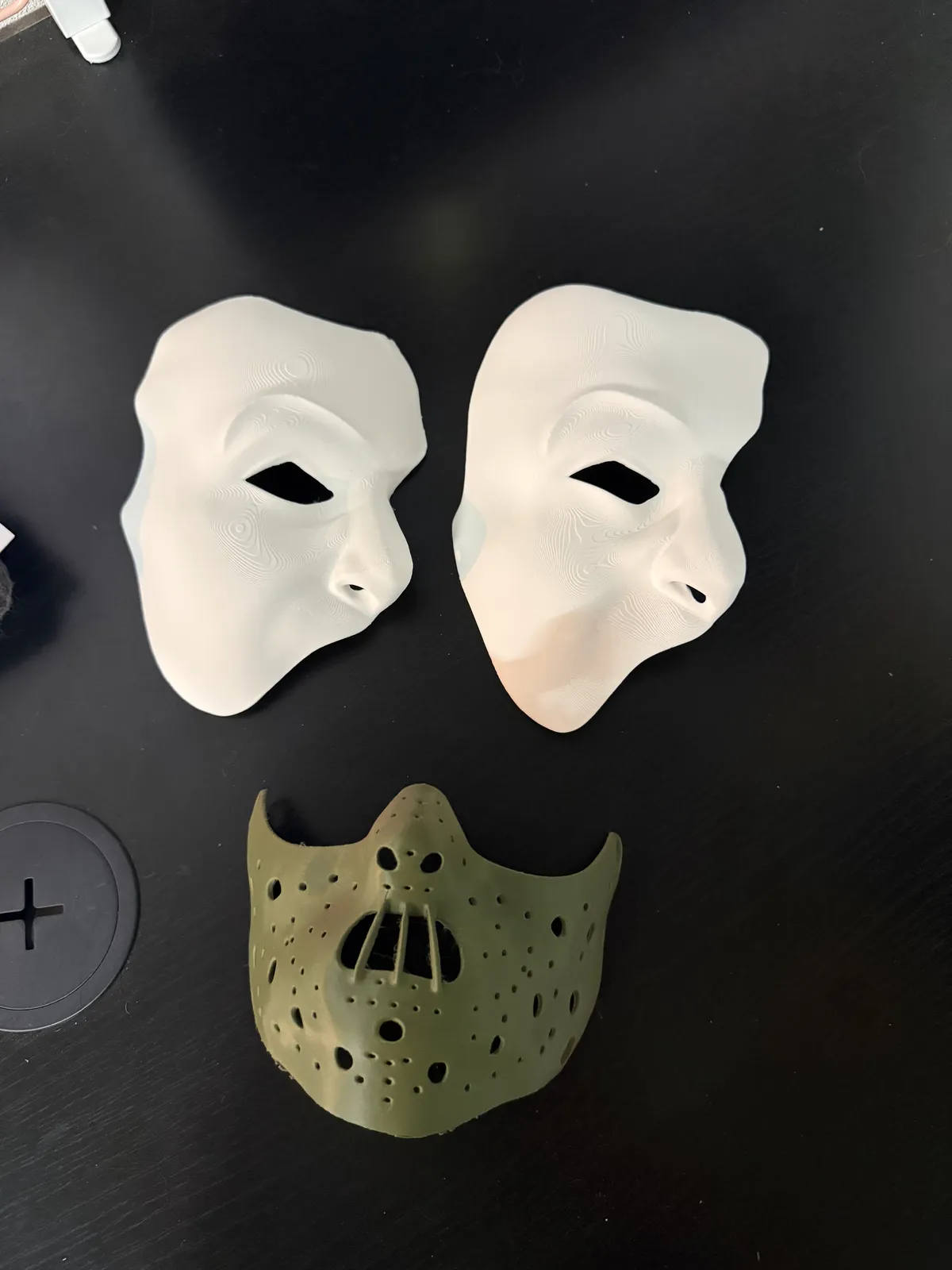
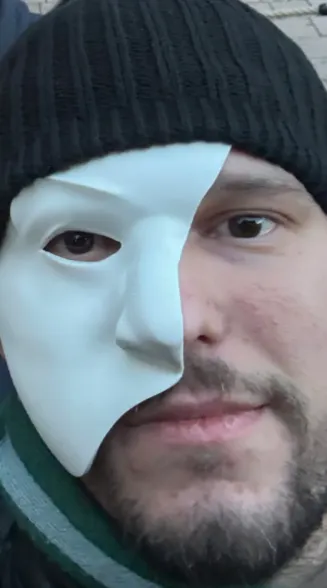
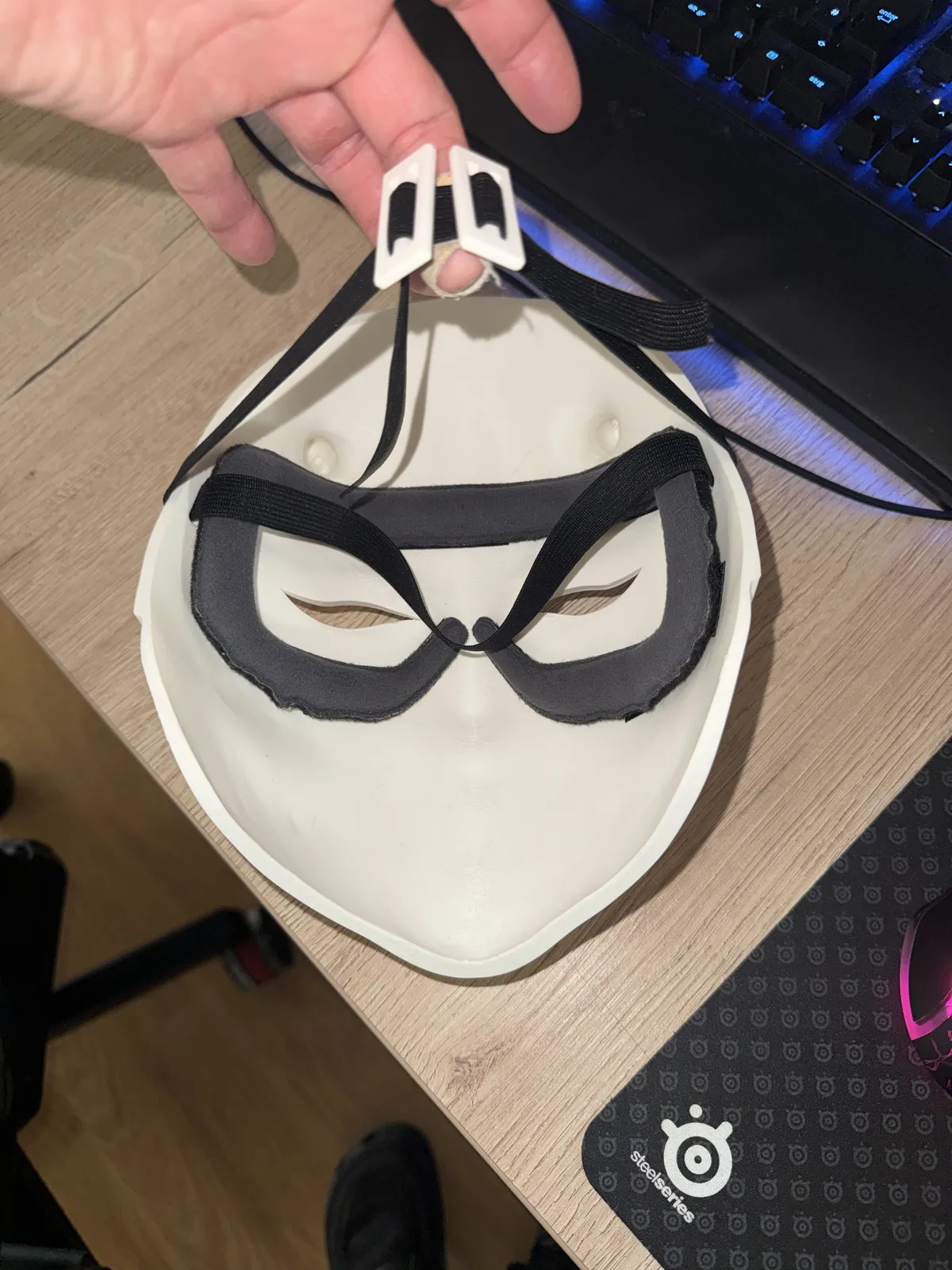
Test result
Passed. Nine masks for six faces, each one fits only the face it was made for.